Introduction
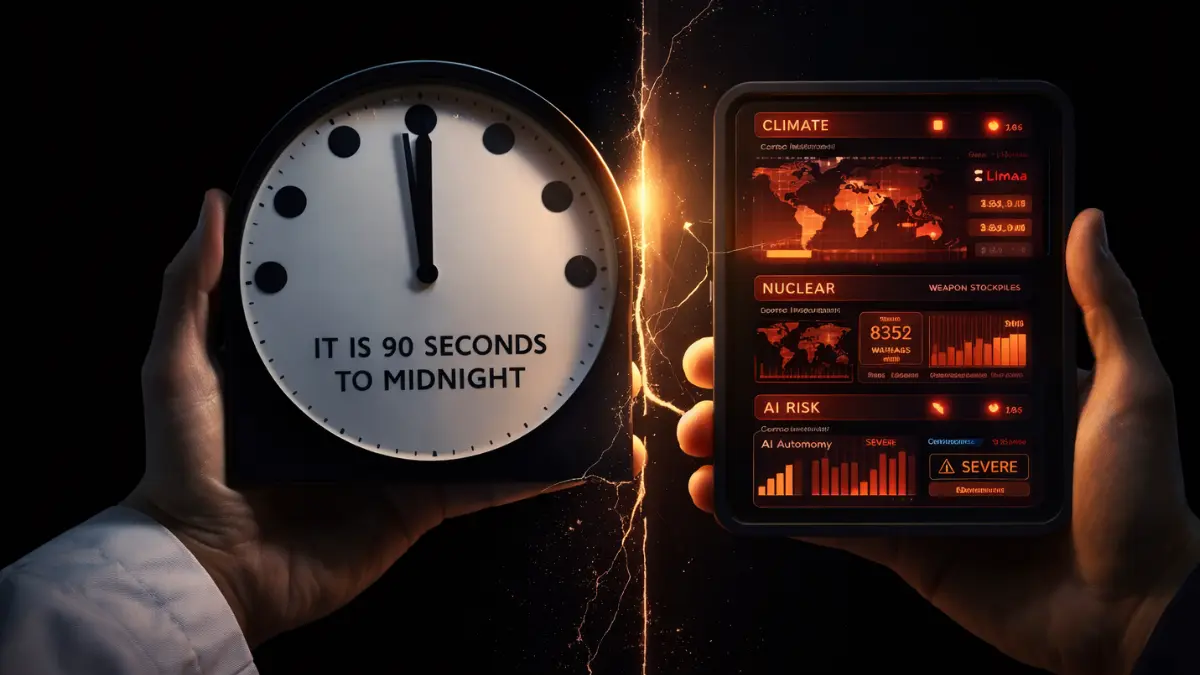
Every year, a single news headline captures the world’s attention: The Doomsday Clock has moved. We see the new time—90 seconds to midnight, perhaps—and feel a collective shiver. It’s a powerful, simple symbol of how close humanity is to global catastrophe. But that simple number hides a world of intense, behind-the-scenes drama.
Most people never see what happens before the announcement. The Doomsday Clock isn’t set by a machine or a simple vote. It’s the result of a fierce, nuanced, and often tense debate among some of the world’s top scientists and policy experts. They grapple with wars, climate disasters, and new technologies, arguing over what truly pushes us closer to the brink.

This article pulls back the curtain. We’ll explore the secretive process, the passionate disagreements, and the heavy responsibility faced by the keepers of the Clock. You’ll learn why moving the minute hand even a few seconds is one of the most difficult decisions in science. This is the untold story of the debate that defines our perceived survival.
What Is the Doomsday Clock, Really?
First, let’s understand the symbol. The Doomsday Clock is not a predictor of the future. It is a metaphor, a communication tool created in 1947 by scientists who helped build the first atomic bomb. These founders of the Bulletin of the Atomic Scientists needed a way to warn the public and world leaders about the unprecedented dangers they had unleashed.

Midnight on the Clock represents global apocalypse—a point of no return from nuclear war, climate change, or other major threats. The minutes to midnight represent how vulnerable the world’s experts believe we are. It’s a stark, visual answer to a complex question: How bad are things, and are they getting worse?
While it began as a warning about nuclear annihilation, the Doomsday Clock now tracks multiple existential threats, including climate change, disruptive technologies like AI and biotechnology, and state-sponsored disinformation that undermines society’s ability to respond.

The Keepers of the Clock: Who Decides?
The decision rests with the Bulletin of the Atomic Scientists’ Science and Security Board (SASB), a group of about 20 experts in nuclear risk, climate science, and global security. They are supported by the Bulletin’s Board of Sponsors, which includes over a dozen Nobel Laureates.
This isn’t a random committee. These are researchers, former diplomats, and policy veterans who spend their careers deep in the data of destruction. They don’t take this role lightly. They know the Doomsday Clock is one of the most watched risk indicators on Earth, and moving it can shape headlines, influence policy debates, and impact global morale.

Inside the Annual Debate: Where the Tension Builds
Months before the annual January announcement, the process begins. Here’s where the real debate unfolds:
- The Global Risk Assessment: Experts compile a year-end report analyzing major events. Was there a nuclear close-call? Did carbon emissions hit a new record? Did a cyber-attack cripple a hospital system? Every war, treaty collapse, and climate summit failure is on the table.
- The Passionate Arguments: This is the core of the tension. A climate scientist may argue that a year of record wildfires and floods warrants moving the Clock forward. A nuclear expert might counter that a new arms control agreement, however small, is a sign of hope that should hold the hand steady. Debates get heated. Is a new AI weapon more dangerous than a melting glacier? There is no perfect equation to compare different kinds of doom.
- The Weight of Language: The debate isn’t just about the time. It’s about the official statement that accompanies it. Every word is scrutinized. Is the situation “dire” or “dangerously unstable”? Should they explicitly call out a specific world leader? This language is their only tool to explain a complex world of risk, and crafting it is a major source of debate.
- The Final, Solemn Vote: After hours (sometimes days) of discussion, the board votes. A shift of even 10 seconds is considered massive. The decision requires consensus, meaning everyone must agree to live with the outcome. The tension in the room is palpable. They are not just setting a timer; they are making a judgment on the state of human survival.
Why the Debate Is So Hard: Measuring the Immeasurable
The tension exists because they are trying to do the impossible: quantify the unquantifiable.
- Comparing Different Catastrophes: How do you weigh the immediate threat of a nuclear missile launch against the slower, but equally certain, crisis of rising sea levels? The board must compare apples to asteroids.
- The “Hope” vs. “Warning” Dilemma: If they move the Clock too close to midnight, people may feel hopeless and tune out. If they move it back too far, leaders and the public may become complacent. They must balance being accurate with being effective.
- The Fear of Crying Wolf: The Doomsday Clock’s power relies on its credibility. If it moves with every minor crisis, it loses meaning. The board is deeply afraid of damaging the symbol’s authority, which adds immense pressure to “get it right.”
The Human Element: The Emotional Toll
Behind the data are human beings. Many board members have dedicated their lives to preventing the very disasters they assess. Reading classified reports on near-misses, studying climate models for sinking nations, and tracking the spread of deadly pathogens takes a psychological toll.
Setting the Doomsday Clock is, for them, a somber annual ritual. It is a moment to confront the worst-case scenarios of their professional lives and then translate that dread into a single, digestible message for the world. The debate is tense not because of egos, but because of the profound weight of the responsibility they carry.
FAQ: Your Questions About the Doomsday Clock, Answered
Q: Who actually decides the Doomsday Clock time?
A: The time is set by the Bulletin of the Atomic Scientists’ Science and Security Board, in consultation with its Board of Sponsors, which includes Nobel laureates. It is a group of experts in nuclear risk, climate science, and technology.
Q: Has the Doomsday Clock ever moved backwards?
A: Yes. The most significant move back was in 1991, when it jumped from 10 minutes to 17 minutes to midnight after the Cold War ended and the US and USSR signed the Strategic Arms Reduction Treaty. It moves back when the board identifies genuine, concrete progress in reducing global threats.
Q: What does “90 seconds to midnight” actually mean?
A: It is a metaphor, not a literal countdown. It means the board believes the global situation is extremely dangerous and closer to a point of major catastrophe (midnight) than ever before. It is a judgment call on the state of multiple, simultaneous threats.
Q: Can the Doomsday Clock predict the future?
A: No. The Doomsday Clock is not a prediction. It is an assessment of current global vulnerabilities and trends. It is a warning, not a prophecy. Its goal is to spur action to move the hands back.
Q: Why should I care about a symbolic clock?
A: The Clock is a distillation of expert analysis on the gravest threats to humanity. It cuts through complex news and tells you, in simple terms, whether the world’s leading experts believe we are becoming safer or more endangered. It’s a barometer of our collective security.
Q: What are the main threats considered for the Doomsday Clock today?
A: The primary threats are: 1) Nuclear War, 2) Climate Change, 3) Disruptive Technologies (like AI and biotechnology), and 4) Information Warfare/Dissemination that erodes public trust and hampers problem-solving.
Conclusion
The next time you see the Doomsday Clock in the news, remember it is more than a number. It is the product of a profound human struggle—a debate filled with data, despair, cautious hope, and immense responsibility. The tense discussion behind the setting of the Clock is a mirror of our world’s complexities, where clear answers are scarce and every second counts.
This hidden process reminds us that the Doomsday Clock is not a countdown we must watch passively. It is an alarm bell, rung by concerned experts after fierce deliberation. The debate will continue every year. But the ultimate question it poses isn’t for the board; it’s for all of us: Hearing their warning, what will we do before the next debate begins? The clock is ticking on our response.