Introduction
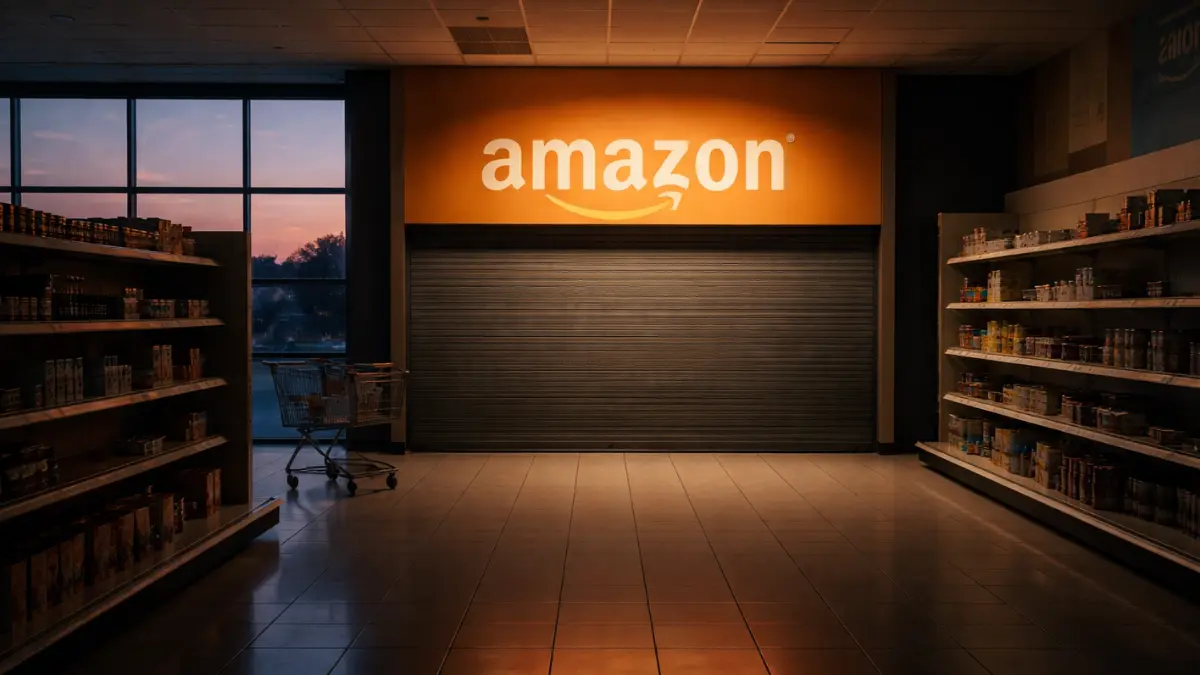
If you’ve ever used Amazon Fresh to skip the grocery store lines, some recent news might have caught your eye: Amazon Fresh stores are closing. Across the country, from Illinois to California, signs are going up on these high-tech supermarkets, announcing they won’t be reopening. For many shoppers, this comes as a surprise. Amazon is a giant, and its push into physical grocery stores with Amazon Fresh felt like the future of shopping.
But these closures aren’t just about a few underperforming stores. They make you wonder: what’s really going on? Is Amazon giving up on groceries, or is this a strategic retreat? This article will break down the Amazon Fresh shutdowns, explain the likely reasons behind them, and explore what this could mean for the future of how you buy your groceries. We’ll look at whether this is a simple business correction or the first sign of a much bigger shift in Amazon’s empire.

The Headlines: Which Amazon Fresh Stores Are Closing?
First, let’s talk about what’s actually happening. Amazon hasn’t shut down the entire Fresh chain, but it has closed a significant number of locations over the past year. Reports have confirmed closures in states including California, Illinois, Indiana, Ohio, and Washington. Some stores closed with little warning, leaving customers confused and employees looking for new jobs.
Importantly, the Amazon Fresh delivery service you might use online is still running. These closures are specifically about the physical supermarket stores. Amazon is being selective, trimming stores that aren’t meeting expectations, rather than pulling out of groceries completely. They’ve stated they remain committed to the grocery business but are periodically evaluating their portfolio.

Why Is Amazon Doing This? The Inside Scoop
Closing stores is a big move. For a company like Amazon, it’s rarely just about money lost on a few locations. Experts point to a few key reasons behind the shutdowns:
- The Stores Just Weren’t Working: This is the biggest reason. Many Amazon Fresh stores reportedly struggled with customer traffic. The “just walk out” technology, which used cameras and sensors to let you skip the checkout, was cool but also expensive and sometimes glitchy. For many shoppers, it was easier to just go to a regular, familiar supermarket.
- Too Much Competition: Amazon walked into a brutal fight. The grocery world is packed with giants like Walmart, Kroger, and Costco, who have decades of experience and fierce customer loyalty. On the other side, discount chains like Aldi and Trader Joe’s have massive followings. Breaking into this market was much harder than Amazon anticipated.
- A Costly Experiment: Building high-tech stores is incredibly expensive. Between the advanced technology, prime real estate, and staffing, the costs were huge. When stores don’t attract enough shoppers, those costs become unsustainable. Closing underperforming locations is a way to stop the bleeding.
- Focusing on the Winners: Amazon isn’t quitting groceries. They still have Whole Foods Market, which they bought in 2017. It seems Amazon might be deciding to focus its energy and money on what works—like Whole Foods and its massive online delivery network—rather than forcing a less successful model.
What This Means for You, the Shopper
So, your local Amazon Fresh is closing. What now?

- For In-Store Shoppers: You’ll need to find a new regular grocery store. The bright side? You might rediscover a local market or find that another store has stepped up its own game with better delivery or curbside pickup options.
- For Online Customers: Don’t worry. Your Amazon Fresh delivery through the Amazon app or website is not going away. In fact, this might be where Amazon doubles down. The company is likely to focus more on its warehouses (called “fulfillment centers”) that pack and deliver groceries directly to your door, which is a model they know very well.
- For the Broader Market: When a giant like Amazon stumbles, it sends a message. It shows that even with all the technology in the world, winning over shoppers for their weekly grocery trip is incredibly difficult. It might make other tech companies think twice before trying to reinvent the physical grocery store.
Is This a Sign of Bigger Changes at Amazon?
This is the million-dollar question. Are the Fresh closures a small adjustment or a symptom of something larger?
Most analysts see it as a strategic pivot, not a full-scale retreat. Think of it less as “Amazon failing” and more as “Amazon learning and shifting.” The company is famous for experimenting. Sometimes those experiments, like Amazon Web Services (its cloud division), become massive successes. Other times, like with the Fire Phone, they fail and get scrapped.

The closure of some Fresh stores suggests Amazon is becoming more disciplined. The days of endless spending on projects that don’t show clear potential might be fading. The company is facing pressure to be more profitable, and that means making tough choices about where to invest.
In the bigger picture, it signals that the future of groceries might not be in flashy, sensor-filled stores, but in a combination of things: the convenience of online delivery, the trusted experience of stores like Whole Foods, and the low prices of giants like Walmart. Amazon is likely regrouping to play to its real strengths in this blended future.
FAQ: Your Questions About “Amazon Fresh Closing,” Answered
Q: Is Amazon Fresh going out of business completely?
A: No. Amazon is closing some of its physical Amazon Fresh supermarket stores. The Amazon Fresh grocery delivery service you use online is still operating. The company says it remains committed to the grocery business.
Q: Why are Amazon Fresh stores really closing?
A: The main reasons are low customer traffic, high costs (especially for the “just walk out” technology), and very tough competition from established grocery chains. Many stores simply weren’t profitable.
Q: How can I find out if my local Amazon Fresh is closing?
A: The best way is to check the Amazon Fresh website or app for official updates on your specific store. Local news outlets also often report when a store in their area is slated to close.
Q: What happens to my Amazon Fresh delivery if my local store closes?
A: Your delivery likely comes from a larger Amazon fulfillment center, not the physical store near you. So, your home delivery service should continue as normal. You won’t be able to shop in that specific store anymore, but you can still order online.
Q: What is Amazon going to do with the empty store buildings?
A: Amazon will likely try to sell or lease the properties to other retailers. Some locations might be converted into other types of Amazon facilities, like smaller delivery hubs, but that is less common.
Q: Does this mean Amazon’s “just walk out” technology is a failure?
A: Not necessarily a failure, but perhaps not ready for the complex environment of a large grocery store. Amazon is still using this technology successfully in its smaller Amazon Go convenience stores. The closures suggest the tech was too costly and complex for the supermarket format at this time.
Conclusion
The sight of “Closed” signs on Amazon Fresh stores is a powerful reminder that even the biggest companies can’t win at everything. Amazon’s experiment with high-tech supermarkets hit some very real-world roadblocks: fierce competition, high costs, and shopping habits that are hard to change.
However, this is less about an ending and more about a change in direction. Amazon isn’t leaving the grocery business; it’s refining its approach. By closing underperforming Fresh stores, the company is likely clearing the deck to focus on what it does best: the logistics of fast delivery and the established brand of Whole Foods.
For the rest of us, it’s a lesson in how innovation works in the real world. The future is rarely a straight line. It’s a process of trying, learning, and adapting. The next time you order groceries online or breeze through a store with a seamless app, you’ll still be seeing Amazon’s influence, just in a way that makes more sense for them—and for you. The game isn’t over; the rules are just being rewritten.

1 thought on “Amazon Fresh Shuts Down: A Sign of Bigger Changes in 2026?”